

Jakarta, inca.ac.id – A Physics Degree helps university students explore some of the most fundamental questions about matter, energy, motion, and the laws that shape the physical universe. Physics is a discipline built on curiosity, logic, observation, and mathematical reasoning. It gives students the tools to understand how natural systems work, from the smallest particles to the behavior of planets, stars, and energy systems. For students interested in science, technology, and analytical problem-solving, physics can be both intellectually demanding and deeply rewarding.
Beyond theory, a physics degree also prepares students for a wide range of scientific and technical careers. The knowledge developed through physics study supports not only research, but also work in engineering, education, computing, data analysis, and applied technology fields. This makes physics a strong academic path for students who enjoy understanding how things work at a deeper level.
Why a physics degree matters
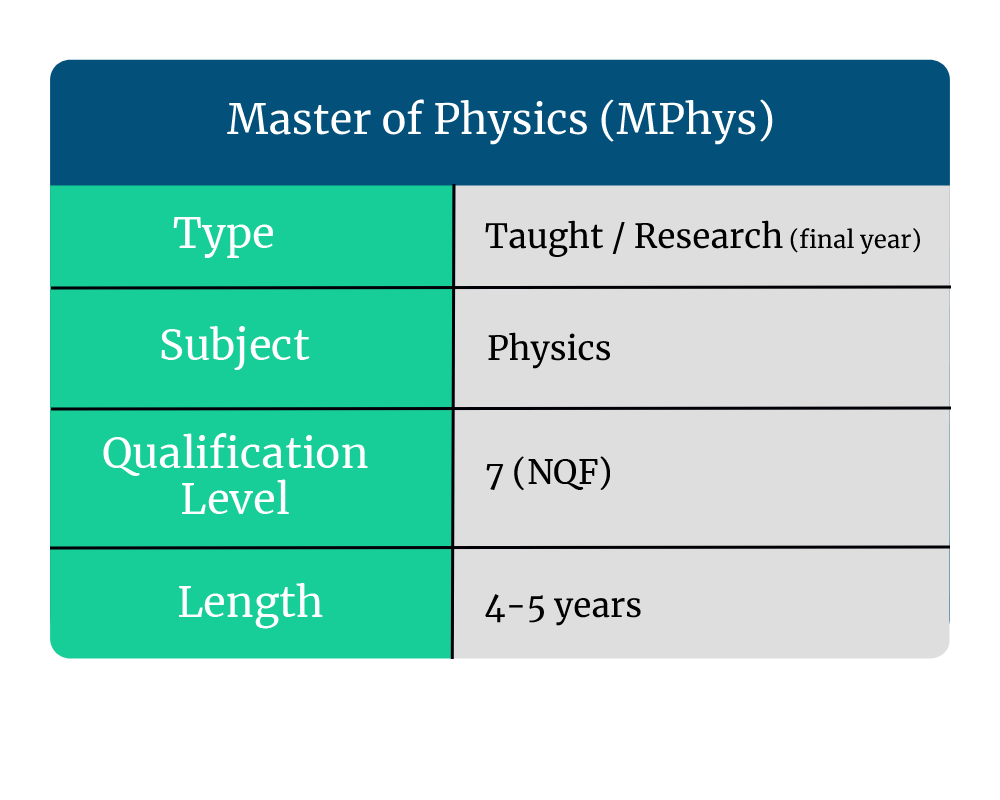
A Physics Degree matters because it provides a strong scientific foundation for understanding the natural world through evidence, reasoning, and quantitative analysis. Physics helps explain everyday phenomena as well as advanced systems that drive modern science and technology.
It also matters because students develop transferable skills such as:
- Analytical thinking
- Mathematical modeling
- Problem-solving
- Experimental reasoning
- Data interpretation
These skills are valuable in both academic and professional settings.
Core topics students study
Students in a Physics Degree usually build knowledge across several major areas that explain how matter and energy behave in different conditions.
Common subjects include:
- Mechanics
- Electricity and magnetism
- Thermodynamics
- Waves and optics
- Quantum physics
- Relativity
- Mathematical methods for physics
These areas help students understand both classical physical systems and more advanced scientific concepts.
Learning through theory and experimentation
A strong Physics Degree combines theoretical understanding with practical investigation. Students do not only study formulas and concepts. They also test ideas through laboratory work, experiments, simulations, and data analysis.
This practical learning often helps students:
- Understand scientific measurement
- Strengthen observation skills
- Analyze results critically
- Connect theory with real evidence
- Build technical confidence
Physics is one of those subjects that politely refuses to be understood by memorization alone.
Career paths in physics and beyond
A Physics Degree can support many career directions because it builds both subject knowledge and versatile analytical skills.
Possible paths may include:
- Scientific research
- Engineering-related fields
- Data science and analytics
- Education and academic roles
- Laboratory and technical work
- Technology and software industries
Some students continue into postgraduate study, while others apply physics skills in broader problem-solving careers.
Why physics is valuable for scientific thinking
One of the strongest benefits of a Physics Degree is that it trains students to think carefully, question assumptions, and approach problems systematically. This kind of thinking is useful not only in physics itself, but across many scientific and technical challenges.
Students often become better at:
- Breaking complex issues into parts
- Identifying patterns and relationships
- Working with abstract concepts
- Applying logic under uncertainty
That mental discipline is one of the degree’s most lasting benefits.
Final thoughts
A Physics Degree helps university students understand matter, energy, and the scientific principles that shape the world around them. Through theory, experimentation, and analytical training, students build both deep scientific knowledge and flexible skills for a range of future careers.
Physics asks difficult questions and rarely offers lazy answers. For students who enjoy thinking deeply and solving problems carefully, that is exactly part of its appeal.
Explore our “”Knowledge“” category for more insightful content!
Don't forget to check out our previous article: Leadership Opportunities: Cultivating Tomorrow's Leaders in University
Penulis

#analytical skills #higher education #matter and energy #Physics Degree #physics education #science study #scientific careers #university students
Related Posts
 Kuliah Perdana Menjadi Langkah Awal Mahasiswa Mengenal Sistem Belajar dan Kehidupan Kampus
 Ilmu Kesehatan Anak Membantu Mahasiswa Memahami Kesehatan dan Perawatan Anak Sejak Dini
 Sosial Ekonomi Perikanan Membantu Mahasiswa Memahami Usaha, Masyarakat, dan Kehidupan di Sektor Perikanan
 Manajemen Pariwisata Membantu Mahasiswa Memahami Cara Mengelola Usaha dan Layanan Wisata