
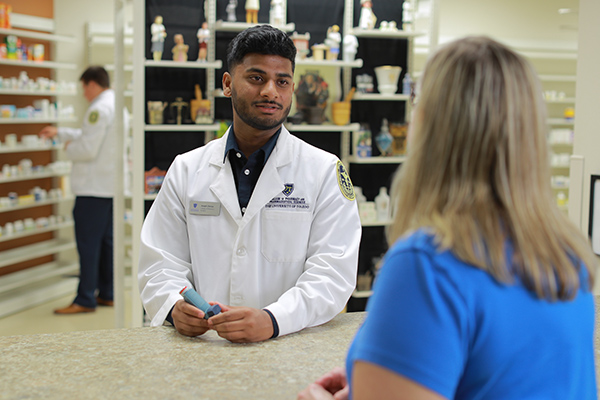
Jakarta, inca.ac.id – A Pharmacy Program gives university students a strong foundation in medical knowledge, medication science, and patient care skills that are essential for healthcare practice. Pharmacy is not only about learning drug names or formulas. It is a field that connects biology, chemistry, clinical understanding, communication, and professional responsibility. Students who enter a pharmacy program prepare for a role that supports both treatment outcomes and patient safety.
As healthcare systems become more complex, pharmacists play an increasingly important role in guiding medication use, preventing harmful interactions, and educating patients. A pharmacy program helps students build the academic and practical skills needed to contribute to that responsibility with competence and care.
Why a pharmacy program matters
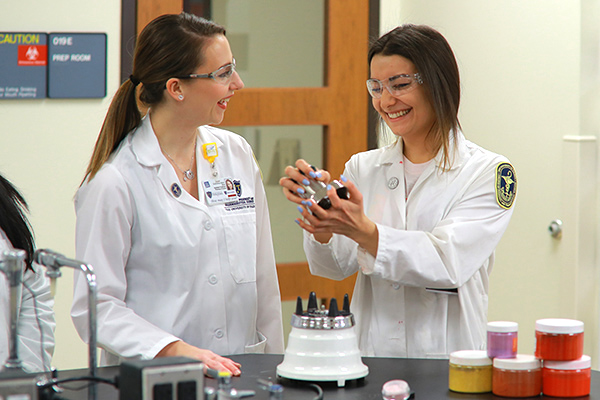
A Pharmacy Program matters because it prepares students for a profession that is directly linked to health outcomes and public well-being. Pharmacists help ensure that medications are used safely, effectively, and appropriately across hospitals, clinics, community pharmacies, and other healthcare environments.
The program also helps students understand how scientific knowledge is applied in real patient situations. This makes pharmacy education both academically rigorous and professionally relevant.
Core knowledge students develop
Students in a Pharmacy Program study a wide range of scientific and clinical subjects that form the basis of safe medication practice.
These often include:
- Human anatomy and physiology
- Biochemistry
- Pharmacology
- Pharmaceutical chemistry
- Drug formulation
- Pathophysiology
- Therapeutics
- Public health concepts
This knowledge allows students to understand how medicines work, how diseases affect the body, and how treatment decisions are made.
Building patient care skills
A strong Pharmacy Program does more than teach science. It also develops the patient care skills needed for responsible healthcare practice. Pharmacists often interact directly with patients, explain medication use, and support treatment adherence.
Important patient care skills may include:
- Clear communication
- Accurate medication counseling
- Ethical decision-making
- Attention to patient safety
- Professional teamwork
- Clinical reasoning
These skills help students move from theory to healthcare service with greater confidence.
The role of practical and clinical training
Practical learning is a major part of a Pharmacy Program because students need experience applying knowledge in realistic settings. Laboratory work, simulations, and supervised placements help students understand how pharmacy functions in practice.
Clinical or practical training may involve:
- Compounding and dispensing practice
- Reviewing prescriptions
- Learning medication safety procedures
- Participating in case discussions
- Observing patient counseling
- Training in hospital or community settings
This experience helps students prepare for professional responsibilities beyond the classroom.
Career opportunities after graduation
A Pharmacy Program can lead to several healthcare and science-related career paths depending on licensing requirements and further training.
Possible directions may include:
- Community pharmacy
- Hospital pharmacy
- Clinical pharmacy
- Pharmaceutical industry
- Regulatory affairs
- Research and development
- Public health or academic roles
This range makes pharmacy a flexible profession with both clinical and technical applications.
Final thoughts
A Pharmacy Program helps university students build medical knowledge and patient care skills that are essential for safe and effective healthcare practice. Through scientific study, clinical preparation, and professional training, students develop the foundation needed for meaningful work in the pharmacy field.
Pharmacy education is demanding, but for students drawn to science, health, and patient support, it offers a path with both intellectual depth and practical impact
Explore our “”Knowledge“” category for more insightful content!
Don't forget to check out our previous article: Student Visa: Essential Requirements for University Students Planning International Study
Penulis

#clinical training #healthcare careers #medical knowledge #patient care #pharmaceutical science #pharmacy education #Pharmacy Program #university students
Related Posts
 Kuliah Perdana Menjadi Langkah Awal Mahasiswa Mengenal Sistem Belajar dan Kehidupan Kampus
 Ilmu Kesehatan Anak Membantu Mahasiswa Memahami Kesehatan dan Perawatan Anak Sejak Dini
 Sosial Ekonomi Perikanan Membantu Mahasiswa Memahami Usaha, Masyarakat, dan Kehidupan di Sektor Perikanan
 Manajemen Pariwisata Membantu Mahasiswa Memahami Cara Mengelola Usaha dan Layanan Wisata