
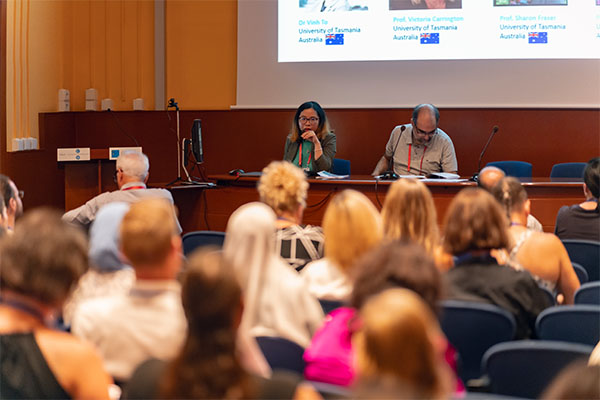
Jakarta, inca.ac.id – Writing a Conference Paper is an important academic step for university students who want to present research in a formal and professional setting. Unlike a regular class assignment, a conference paper is often written for a broader academic audience that may include lecturers, researchers, panel moderators, and fellow students from other institutions. This means the writing must be clear, focused, and well organized. A strong conference paper does more than share findings. It shows that the student understands the research process and can communicate ideas in a way that supports academic discussion.
For many students, the challenge begins with adapting their research into a format that suits presentation. A full thesis or research report may contain extensive detail, but a conference paper needs stronger selectivity. Students must identify the most relevant points, structure them logically, and present them in a way that is both concise and informative. This balance is what makes conference paper writing a valuable academic skill.
Understanding the purpose of a conference paper

A Conference Paper is usually designed to present a research question, explain the method, summarize key findings, and highlight the significance of the work. Its purpose is not simply to submit written information, but to support an oral presentation and encourage scholarly exchange. Because of this, the paper should be easier to follow than a long technical document. The audience needs to understand the main message without getting lost in unnecessary detail.
Students should begin by asking what the audience needs to know first. In most cases, that includes the topic, the problem being addressed, the approach taken, and the most meaningful results. If these parts are presented clearly, the rest of the paper becomes much easier to develop.
Organizing the structure effectively
A good Conference Paper usually follows a simple and logical structure. While exact formats may vary by event or discipline, most papers benefit from the following sections:
- Title
- Introduction
- Research objective or question
- Brief literature context
- Methodology
- Findings or discussion
- Conclusion
This structure helps readers and listeners move through the argument without confusion. The introduction should explain the research focus and why it matters. The methodology should be brief but clear enough to show how the study was conducted. The discussion should focus on the most relevant findings rather than trying to include every detail from the research process.
Students should also make sure that each section connects smoothly to the next. A paper that feels disjointed may weaken the audience’s understanding, even when the research itself is strong.
Writing clearly and professionally
Clarity is one of the most important qualities in a Conference Paper. Academic writing should sound professional, but it should not become overly complicated. Students sometimes believe that long sentences and heavy terminology make a paper seem more advanced. In reality, they often make the message harder to follow.
To improve clarity, students should:
- Use direct and precise language
- Avoid unnecessary repetition
- Define technical terms when needed
- Keep sentences focused on one main idea
- Use transitions to connect sections smoothly
Reading the draft aloud can also help identify awkward phrasing. If a sentence feels difficult to say, it may also be difficult to understand. That small test can save a paper from sounding impressive only to the furniture in the room.
Adapting research to fit the presentation setting
A Conference Paper should match the time limits and expectations of the event. If a student has only ten or fifteen minutes to present, the paper must support that length. Trying to include too much can make the presentation rushed and unclear.
Students should prioritize:
- The core argument of the research
- The most important evidence
- The key conclusion
- The practical or academic significance
It is often better to explain fewer points well than to mention many points too quickly. Conference audiences usually remember strong main ideas more than crowded detail.
Revising before submission and presentation
Revision is essential when preparing a Conference Paper. A first draft may contain useful content, but strong academic writing usually improves through editing. Students should review grammar, organization, and consistency. They should also confirm that the title matches the content and that the conclusion clearly reflects the paper’s main argument.
Helpful revision steps include:
- Checking whether every section supports the research focus
- Removing details that do not strengthen the paper
- Verifying citations and references if required
- Asking a lecturer or peer to review the draft
- Practicing the presentation using the paper as a guide
This final step matters because the paper and the spoken presentation should work together. A well-written document becomes even stronger when the student is prepared to explain it confidently.
Final thoughts
A Conference Paper gives university students the chance to share research in a more public and professional academic environment. To do this well, students need clear structure, focused content, and writing that is concise without losing substance. The best papers are not the ones that try to say everything. They are the ones that communicate the most important ideas with confidence and clarity.
For students presenting research, writing a conference paper is more than an assignment. It is an opportunity to enter academic conversation, strengthen communication skills, and present knowledge in a form that others can understand and value.
Explore our “”Knowledge“” category for more insightful content!
Don't forget to check out our previous article: Final Exams: Practical Review Strategies for University Students to Improve Performance
Penulis

#academic communication #academic presentation #Conference Paper #research skills #research writing #student research #university students #Writing Tips
Related Posts
 Kuliah Perdana Menjadi Langkah Awal Mahasiswa Mengenal Sistem Belajar dan Kehidupan Kampus
 Ilmu Kesehatan Anak Membantu Mahasiswa Memahami Kesehatan dan Perawatan Anak Sejak Dini
 Sosial Ekonomi Perikanan Membantu Mahasiswa Memahami Usaha, Masyarakat, dan Kehidupan di Sektor Perikanan
 Manajemen Pariwisata Membantu Mahasiswa Memahami Cara Mengelola Usaha dan Layanan Wisata