
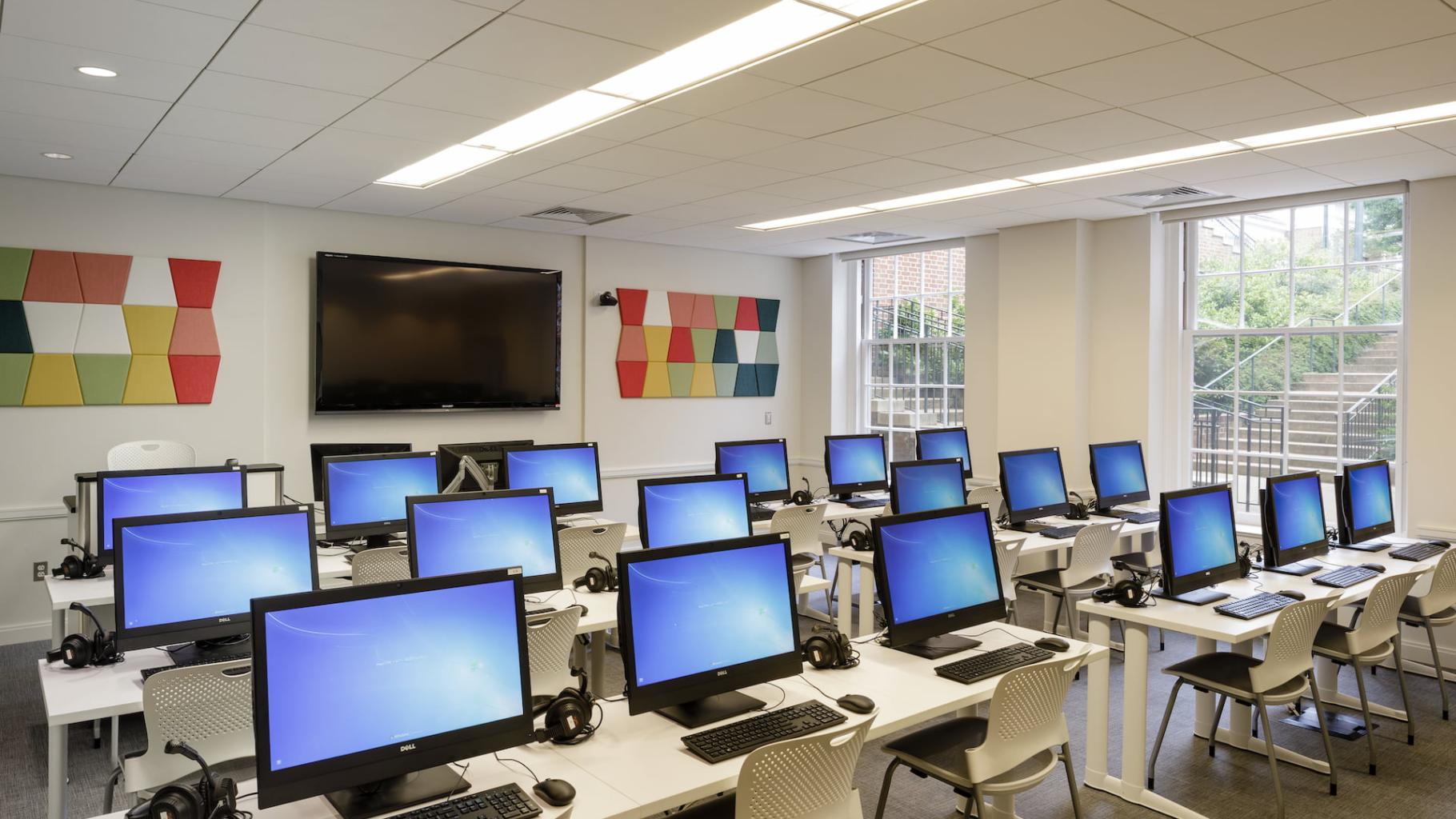
Jakarta, inca.ac.id – Learning a language involves much more than memorizing vocabulary or studying grammar rules. Real communication requires listening, speaking, pronunciation, comprehension, confidence, and repeated practice in meaningful contexts. That is why Language Labs are such a valuable part of education. To me, language labs are structured learning environments, often supported by audio, digital, or interactive tools, that help students strengthen practical communication skills through guided practice and active engagement.
Why Language Labs Matter
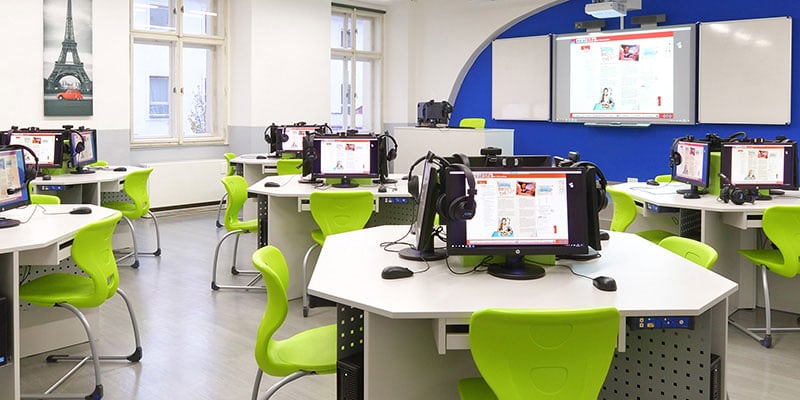
In my experience, Language Labs matter because they give learners opportunities to practice language in ways that standard classroom instruction may not always provide. In a regular class, time is often divided among many students, and speaking practice may be limited. A language lab creates space for focused listening, pronunciation exercises, speaking drills, conversation simulation, and individual feedback.
This becomes especially important because communication skills develop through use, not only through explanation. Students may understand grammar concepts on paper but still struggle to pronounce words clearly, follow spoken language, or respond confidently in conversation. Language labs help bridge that gap between knowing about a language and actually using it.
There is also a strong connection to communication Knowledge and learner confidence here. Language learning becomes more effective when students can hear, repeat, compare, correct, and improve in a supportive setting.
My Perspective on Communication Development
What changed my understanding of Language Labs was realizing that they are not just rooms with technology. At first, a language lab may seem mainly like a place for audio exercises or technical practice. But over time, I came to see that its real value lies in how it supports active communication. It gives learners repeated chances to listen carefully, speak more clearly, and become more comfortable using language as a living skill rather than a school subject.
That is what makes this topic meaningful to me. Language labs are not only about equipment. They are about creating conditions in which communication skills can grow.
Core Benefits of Language Labs
I think the value of Language Labs becomes easier to understand when their main benefits are broken down clearly.
Listening improvement
Students hear accurate pronunciation, natural speech, and varied accents more consistently.
Pronunciation practice
Learners can repeat and refine sounds with greater attention and feedback.
Speaking confidence
Frequent oral practice helps reduce hesitation and fear of making mistakes.
Individualized learning
Students can work at their own pace in many lab-based activities.
Interactive engagement
Digital tools and guided exercises make language practice more active.
Skill integration
Listening, speaking, reading, and sometimes writing can be connected more effectively.
Common Challenges in Language Labs
I have noticed that Language Labs also come with practical limitations.
Unequal access
Not all schools have strong technology or enough equipment.
Overreliance on drills
Practice becomes less effective if it is too mechanical or repetitive.
Limited human interaction
Technology cannot fully replace real conversation with teachers and peers.
Technical issues
Equipment problems can interrupt learning.
Student anxiety
Some learners may still feel nervous about speaking, even in lab settings.
Practical Value of Language Labs
I believe Language Labs offer lasting value because they make communication practice more focused and achievable.
They strengthen real-world language use
Students practice skills that matter in conversation, study, and work.
They support independent improvement
Learners can hear their own progress over time.
They make feedback more immediate
Mistakes can be noticed and corrected more clearly.
They complement classroom instruction
Labs add applied practice to theoretical learning.
They build confidence through repetition
Repeated exposure and use help students become more comfortable communicating.
Below is a simple overview of how language labs enhance communication skills:
| Language Labs Function | Why It Matters | Example in Practice |
|---|---|---|
| Listening practice | Improves comprehension of spoken language | Students listen to recorded dialogues and answer comprehension questions |
| Pronunciation training | Helps learners produce clearer speech | A student repeats target sounds and compares them with model audio |
| Speaking development | Builds fluency and confidence | Learners record short responses to prompts and review their delivery |
| Individual pacing | Supports different learning speeds | Students complete exercises according to their own progress level |
| Interactive learning | Makes practice more engaging | Software provides immediate feedback on vocabulary and sentence use |
These examples show that language labs are not simply technical spaces. They are learning environments designed to help students improve practical communication skills in a more active and supported way.
Why Language Labs Matter Beyond the Classroom
I think Language Labs matter because communication skills affect opportunities far beyond school. The ability to listen carefully, speak clearly, understand others, and express ideas with confidence is useful in academic life, professional settings, travel, and everyday interaction. Language labs help students build those abilities through practice that feels more direct and applied.
That broader significance is what makes this topic so valuable. Language labs are not only about language instruction. They are about enhancing communication skills for real life.
Final Thoughts
For me, Language Labs are one of the most helpful tools in language education because they support listening, pronunciation, speaking confidence, and practical communication in a focused environment. They help students move from passive understanding to active use.
That is why they matter so much. Language labs are not simply support rooms. They are powerful spaces for enhancing communication skills.
Explore our “”Knowledge“” category for more insightful content!
Don't forget to check out our previous article: Thesis Research: Conducting In-Depth Investigations
Penulis

#communication skills #education technology #interactive learning #Language Labs #language learning #listening skills #pronunciation practice #speaking confidence
Related Posts
 Kuliah Perdana Menjadi Langkah Awal Mahasiswa Mengenal Sistem Belajar dan Kehidupan Kampus
 Ilmu Kesehatan Anak Membantu Mahasiswa Memahami Kesehatan dan Perawatan Anak Sejak Dini
 Sosial Ekonomi Perikanan Membantu Mahasiswa Memahami Usaha, Masyarakat, dan Kehidupan di Sektor Perikanan
 Manajemen Pariwisata Membantu Mahasiswa Memahami Cara Mengelola Usaha dan Layanan Wisata